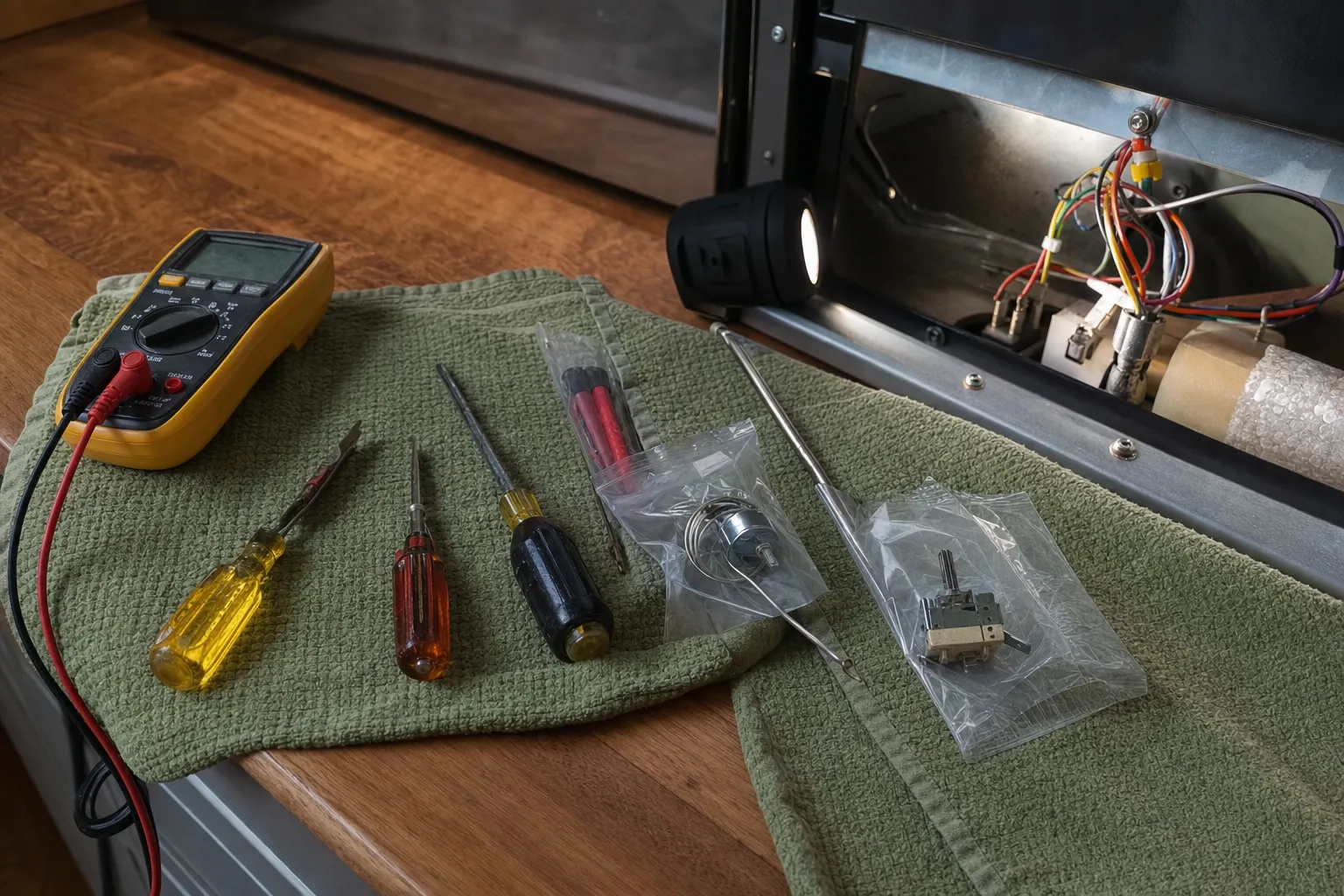
Freezer Repair
Frost Keeps Coming Back: What Upkeep Rules Out
Frost that returns on its own rhythm is not an upkeep problem. What a clean coil, a closing door and a sound gasket rule out, and what they do not.
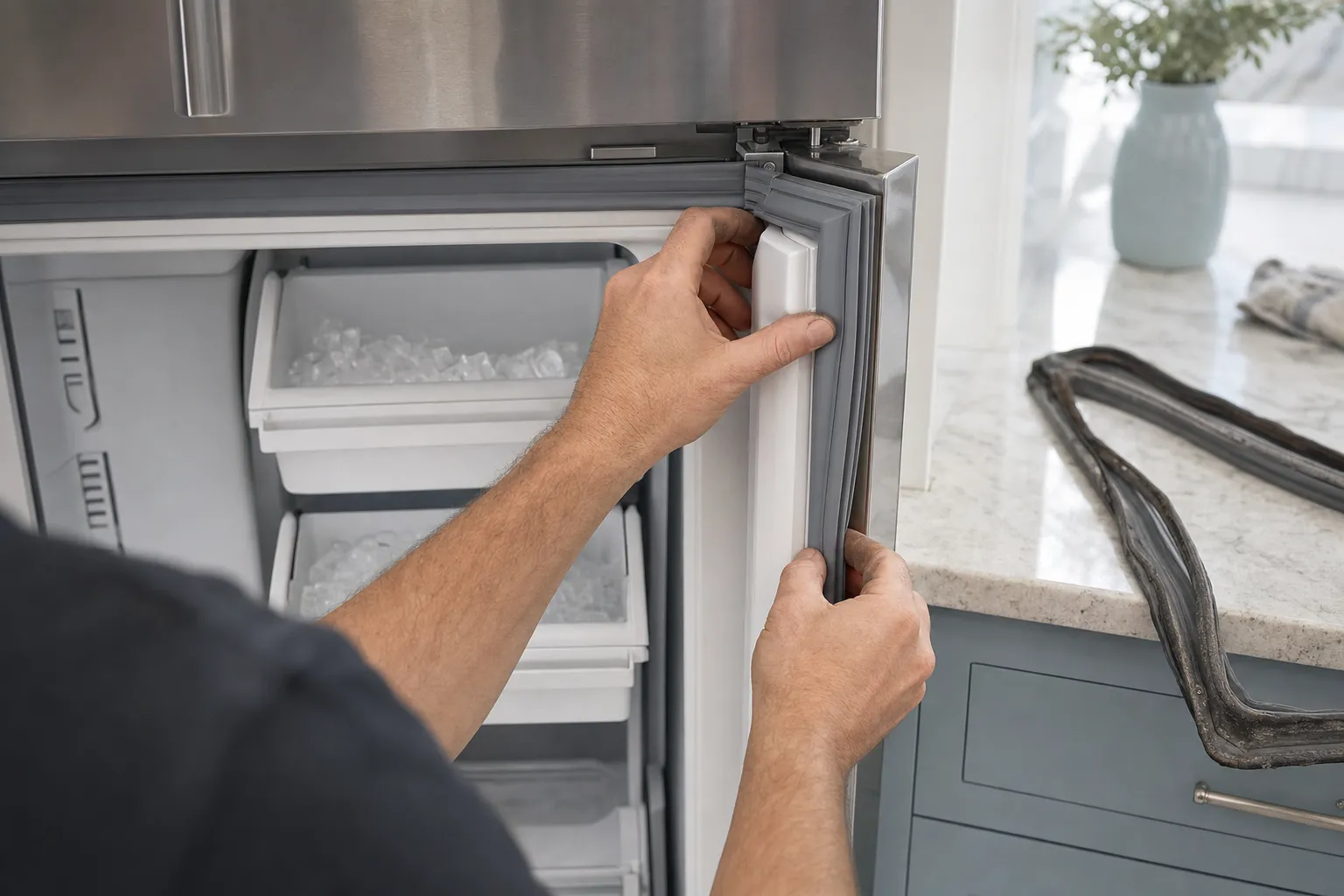
Regular upkeep prevents some frost and has nothing to say about the rest, and the difference decides whether a Sub-Zero freezer needs a brush or a technician. The manufacturer’s own troubleshooting for frost starts with owner jobs: a clean condenser, a door that closes properly, a gasket without tears. When those are done and the ice still comes back on its own schedule, upkeep has run out of room.
| Where the frost is | Does upkeep prevent it? | What it points to |
|---|---|---|
| Light rime at the drawer edges in a busy week | Yes, and it is normal | Nothing to fix |
| Frost at the opening, the frame or the gasket | Partly: a closing door and a sound gasket | The door seal or the drawer’s alignment |
| An even sheet on the rear panel that returns | No | The defrost system behind the panel |
| Ice at the base, water on the floor after a thaw | No | A blocked defrost drain |
| Call when | frost is back on the rear panel within weeks of a full defrost | Sub-Zero Repair Issaquah, (425) 272-6613 |
“I’ve defrosted it twice now and it keeps coming back” is the sentence that lands on the third row. A freezer that ices up once has had an event; one that ices up again and again, on its own rhythm, has stopped clearing its own coil.
Where upkeep stops
A frost-free freezer warms its own evaporator coil at intervals, melts what has gathered there and sends the water away down a drain. Nothing an owner does reaches that chain: a brushed condenser, a seated door and an intact gasket cannot start a cycle that is not firing, and no amount of manual defrosting mends the part that should have fired it. The two rows above that answer “No” are the two rows upkeep cannot touch, and both of them are diagnosed with a meter rather than a schedule. Everything below here is about telling them apart from the rows upkeep can reach, and about arriving at that visit with the useful facts in hand.
Telling a defrost fault from a door-seal fault
These two produce similar-looking frost and need entirely different repairs, so it is worth separating them before anyone is called.
Where is the ice? Defrost faults ice the rear evaporator panel first — a broad, even sheet behind the drawers or on the back wall. Seal faults ice near the opening: the top of the drawer front, the frame, the gasket itself, the corners nearest the hinge.
How fast does it come back? A defrost fault returns on a rhythm, often within two to four weeks of being cleared, at roughly the same rate each time. A seal fault is weather and usage dependent — worse in a humid week, worse after a party, better when the house is empty.
Does the drawer close flush? Run the paper test: shut a sheet of paper in the seal at four points and pull each one. Any that slides out freely marks a spot where the gasket has lost compression. On drawer freezers, check the rails too — a drawer that has dropped even slightly on its runners will hold the gasket off the frame at one corner.
Is there water anywhere? A blocked drain tube ices the base of the compartment and can put water on the floor when it thaws. That is still a defrost-system fault, just at the drainage end rather than the heating end.
What to do before the visit
Clear the ice properly, once, and note the date. Turn the unit off at the control, empty the compartment into a cooler, and let it thaw with the drawer open and towels down. Do not attack it with a screwdriver or a knife: the evaporator tubing sits directly behind that panel and puncturing it turns a modest repair into a sealed-system job.
Once it is clear, run it normally and watch. If frost is visibly back on the rear panel inside three weeks, you have your answer and it is a service call. If it stays clear for months, the original cause was an event — a door left open, a power cut, a load of warm food — and nothing is broken.
Have the model number ready when you call. It is printed on the unit’s rating plate, and the features page of your use-and-care guide marks where that plate is fitted on your model. It decides which parts travel with the technician, and without it one visit can become two.
Common follow-ups
Is a little frost normal in a Sub-Zero freezer?
A light dusting on the coldest surfaces and some rime around the drawer edges is normal, especially in a busy household. What is not normal is a solid layer on the rear panel, ice that builds thicker week after week, or frost that grows back within days of being cleared.
Will manually defrosting fix it permanently?
Only if the cause was a one-off — a door left ajar overnight, or a long power cut. If the frost returns on its own schedule, the automatic defrost cycle has failed and manual defrosting is just resetting the clock on the same fault.
Can I keep using the freezer while I wait for a visit?
Usually yes. A freezer with a defrost fault still freezes; it just loses efficiency as the coil ices over. Move anything you care about away from the rear panel, do not chip at the ice with anything metal, and expect the compartment to run warmer as the build-up grows.